Guide to Choosing a Stairlift
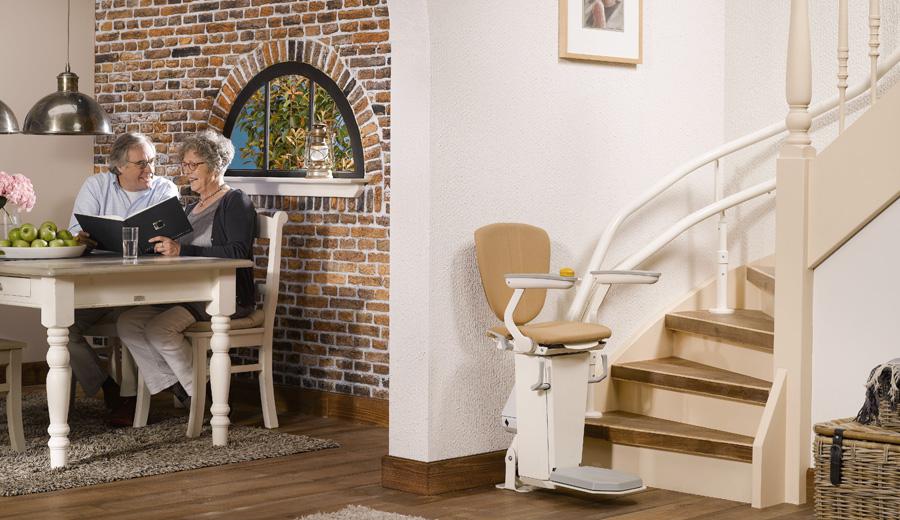
Choosing a stairlift is an important decision that can have a significant impact on a person’s safety, comfort and independence at home. For someone who finds stairs painful, tiring or increasingly difficult to manage, the right stairlift can make it easier to continue using the whole property without relying heavily on family members or carers.
However, stairlifts are not one-size-fits-all products. Staircases differ in shape and width, while users have different mobility levels, body sizes and physical requirements. The best solution should therefore be based on both the staircase and the individual who will use the equipment.
A professional stairlift company should assess the home, discuss the user’s mobility needs and explain the available options before recommending a model. This makes it easier to choose equipment that is safe, practical and appropriate for the household rather than simply selecting a stairlift based on price.
Buying a mobility aid is a major financial decision for many families. Homeowners often look at several factors to determine if a stairlift is a worthy investment before they make a final purchase. This evaluation helps ensure that the equipment fits both their physical needs and their household budget.
Start with a Professional Staircase Assessment
One of the most important steps is arranging an assessment of the staircase and the intended user. Although photographs and measurements can sometimes provide an initial idea of what may be required, an experienced surveyor or stairlift specialist can identify details that are easily overlooked.
The assessment should consider the length and shape of the staircase, available width, doors near the top or bottom, radiators, handrails, landings and other potential obstructions. The installer should also determine whether there is enough room for the user to get on and off the stairlift safely.
The user’s mobility is equally important. Someone with limited flexibility, reduced grip strength or difficulty bending their knees may need different features from a person who simply becomes tired when climbing stairs.
Current stairlift systems are available with options such as compact folding seats, powered swivel mechanisms, safety sensors and track designs that help maintain access around doorways or narrow areas.
Choose the Right Stairlift Type
The design of the staircase largely determines which type of stairlift is appropriate.
Straight Stairlifts
Straight stairlifts are designed for staircases that travel directly from one floor to another without bends, corners or intermediate landings.
They normally use a straight rail and are generally simpler to manufacture and install than customised curved systems. Straight models can also offer compact designs in which the seat, arms and footrest fold away when the lift is not being used.
This can be particularly useful in homes where other members of the household regularly use the staircase.
If there is a doorway or walkway close to the bottom of the stairs, a hinged or moving rail may also be considered. This allows part of the track to move out of the way when the stairlift is parked.
Curved Stairlifts
A curved stairlift is normally required when a staircase changes direction, bends around a corner, passes across a landing or includes unusual angles.
The rail needs to follow the shape of the staircase closely. Because the configuration is more complex, accurate measuring and professional installation become particularly important.
Modern curved stairlift systems can accommodate many staircase configurations, including relatively narrow stairs and multiple bends. Some designs also provide powered swivel seats and folding track options to make getting on and off easier while reducing obstruction around the staircase.
Homeowners comparing options can explore professional suppliers offering new stairlifts in Evesham and discuss whether a straight, curved, new or alternative stairlift configuration is most suitable for their property.
Consider How Much Space the Stairlift Uses
The dimensions of a stairlift matter, particularly in homes with narrow staircases.
Do not consider only how much space the stairlift requires while someone is riding it. Look at its folded dimensions as well.
Many modern stairlifts allow the seat, armrests and footrest to fold upwards. This leaves more space for other people to walk up and down the stairs when the stairlift is not being used.
Some slimline stairlifts are specifically designed to keep the rail and chair relatively close to the wall or staircase edge. Compact designs can therefore be particularly valuable in households where several people share the stairs.
Prioritise a Safe Entry and Exit
Getting onto and off a stairlift can sometimes be more challenging than travelling along the stairs, particularly for someone with poor balance.
A swivel seat can make this process considerably easier. At the upper landing, the seat turns so that the user can face away from the staircase before standing up.
Depending on the stairlift, this movement may be operated manually or electrically. A powered swivel seat may be particularly useful for someone who finds twisting their body or operating a manual release mechanism difficult.
The position of the seat should also allow the user to place their feet securely on the floor when getting on or off.
Look Closely at Safety Features
Safety should be one of the main considerations when comparing stairlifts.
Modern stairlifts commonly incorporate several systems intended to make everyday operation safer. These can include a seatbelt, sensors that detect obstructions, controlled starting and stopping, swivel-seat locking mechanisms and controls designed to stop the stairlift if an obstacle is encountered.
Fold-away components can also reduce the amount of staircase space occupied when the stairlift is parked.
Some models include a key switch, which can prevent unauthorised operation. This may be helpful in homes with children or situations where access to the stairlift needs to be controlled. Safety sensors, seatbelts, keyswitches and folding components are among the features currently offered on established stairlift systems.
Users should receive clear instructions on operating the stairlift safely after installation.
Check the Controls Are Easy to Operate
A stairlift should not require complicated movements or considerable hand strength.
Controls are normally positioned on an armrest so the user can move the stairlift while remaining comfortably seated. Before choosing a model, the person who will actually use the stairlift should ideally try the controls.
This is particularly important for people with arthritis, limited finger movement or reduced grip strength.
Remote call-and-send controls can also be extremely useful. They allow the stairlift to be moved between floors when nobody is sitting in it.
For example, if two members of a household use the same stairlift and the chair is parked upstairs, someone downstairs can call it to their floor.
Understand How the Stairlift Is Powered
Many domestic stairlifts operate using rechargeable batteries, with the batteries recharging from the household electricity supply while the stairlift is positioned on its rail or at designated charging locations.
Battery-powered operation can provide smooth movement and may allow the stairlift to continue operating temporarily during a household power interruption, depending on battery condition, charging arrangements and the particular model.
Some current stairlift systems use continuous charging along the rail, while others use specified charging positions.
Ask the supplier how the chosen model charges, what happens during a power failure, how long batteries typically last under normal use and how replacement batteries are handled.
Think About Comfort as Well as Function
A stairlift may be used several times every day, so comfort deserves careful consideration.
The seat should provide adequate support without making it difficult to sit down or stand up. The footrest should be positioned comfortably, and the armrests should help the user feel secure throughout the journey.
Some stairlift ranges offer different seat styles, upholstery choices or configurations designed for users who have difficulty bending their hips or knees.
The important question is not simply whether someone fits into the seat. The stairlift should allow them to maintain a stable and comfortable position throughout the journey.
Consider New, Reconditioned and Rental Options
Buying a brand-new stairlift is not necessarily the only option.
Professionally reconditioned stairlifts may provide a more economical solution in suitable situations. When considering a used or reconditioned unit, check who has inspected it, which components have been replaced or serviced and what warranty is provided.
Rental may also be worth investigating when the stairlift is expected to be needed temporarily, such as during recovery from an operation or while longer-term home adaptations are being considered.
Straight stairlifts are often easier to reuse because the rail configuration is relatively simple. Curved stairlifts are more complicated because their rails are normally configured specifically for an individual staircase.
The total cost should therefore be considered rather than focusing only on the initial purchase or rental price.
Ask About Warranty, Servicing and Aftercare
A stairlift is mechanical and electrical equipment, so reliable aftercare is extremely important.
Before buying, ask exactly what the warranty covers. Find out whether parts, labour and call-outs are included and whether any important components have different warranty periods.
Also ask what happens if the stairlift develops a fault.
A reputable company should be able to explain how servicing works, how quickly technical support is normally available and whether replacement components are readily obtainable.
Regular servicing can also help identify wear or developing problems before they result in an unexpected breakdown.
Compare the Complete Cost, Not Just the Headline Price
The cheapest quotation is not automatically the best value.
Ask each company to provide a clear quotation showing what is included. Ideally, it should explain the stairlift model, optional features, installation costs, warranty and any additional charges.
Homeowners should also investigate whether financial assistance may be available for necessary home adaptations. Depending on eligibility and individual circumstances, local-authority support or a Disabled Facilities Grant may contribute towards adaptations such as a stairlift.
This is another reason to research available support before committing to a purchase.
Choose the Installation Company Carefully
The quality of the company behind the stairlift can be just as important as the equipment itself.
Look for an established supplier that carries out a proper assessment instead of recommending a model immediately. The company should answer questions clearly, explain why a particular stairlift is appropriate and provide transparent information about installation and aftercare.
Avoid making a decision based solely on promotional discounts or pressure to purchase immediately.
A professional installation should also include a demonstration once the work is complete. The user should understand how to operate the controls, fasten the seatbelt, swivel the seat, use remote controls and recognise any warning signals.
Making the Final Decision
The best stairlift is not necessarily the model with the longest list of features. It is the one that suits the user’s mobility, the layout of the staircase and the practical needs of the household.
Start by determining whether the staircase requires a straight or curved system. Then consider available space, seat design, safety features, powered functions, controls, charging arrangements, warranty and aftercare.
Most importantly, involve the person who will actually use the stairlift in the decision whenever possible. A technically suitable stairlift is only truly useful when the person feels safe and confident using it.
Taking the time to compare products, obtain a professional assessment and understand the complete cost can help homeowners choose a stairlift that supports safer movement between floors while helping the user maintain greater independence within their own home.